

Tucked behind the bustling souvenir shops and seafood stalls of Matsushima’s seaside promenade are the peaceful grounds of one of Tohoku’s major Zen Buddhist temples, Zuiganji. This grand temple, whose two buildings are each recognized as National Treasures in their own right, was built under the direction Date Masamune in 1609, but is also part of a rich history of spirituality in Matsushima which long predates its construction.
Though Zuiganji is one of Matsushima’s main sightseeing spots, this is my first time to visit it. When I first came to Sendai it was still undergoing large-scale repairs and earthquake-proofing. Those repairs, which spanned 10 years, were completed in 2018. I’m very excited to finally experience this historic and sacred place today.
I can already sense its deep history as I walk the path leading to the admission gates, which is lined with towering cedar trees and cliffs filled with man made caves. The caves contain stone memorial towers and their walls are covered with centuries-old carvings of names of Dharmas, signs that they were places for religious services long ago.
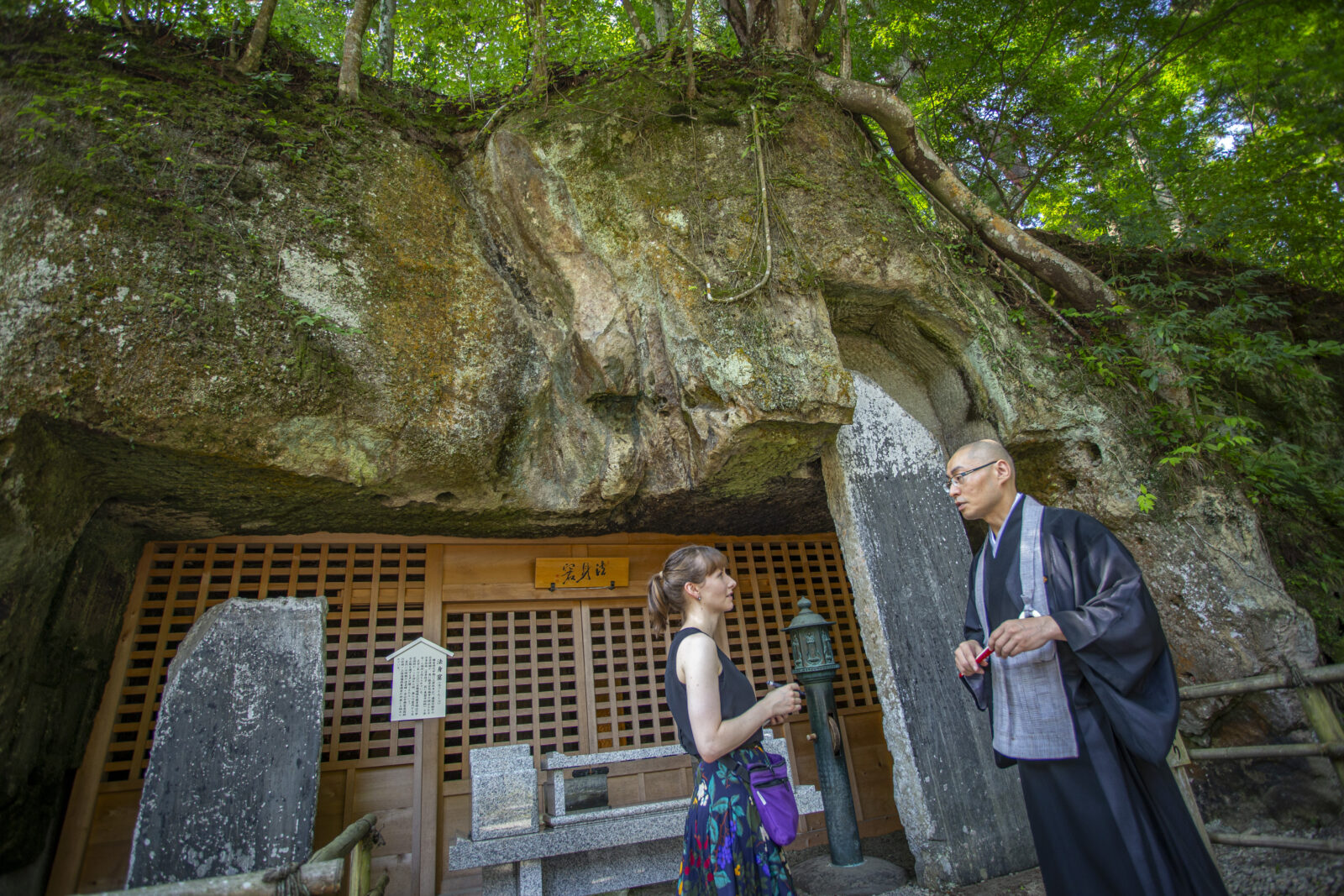
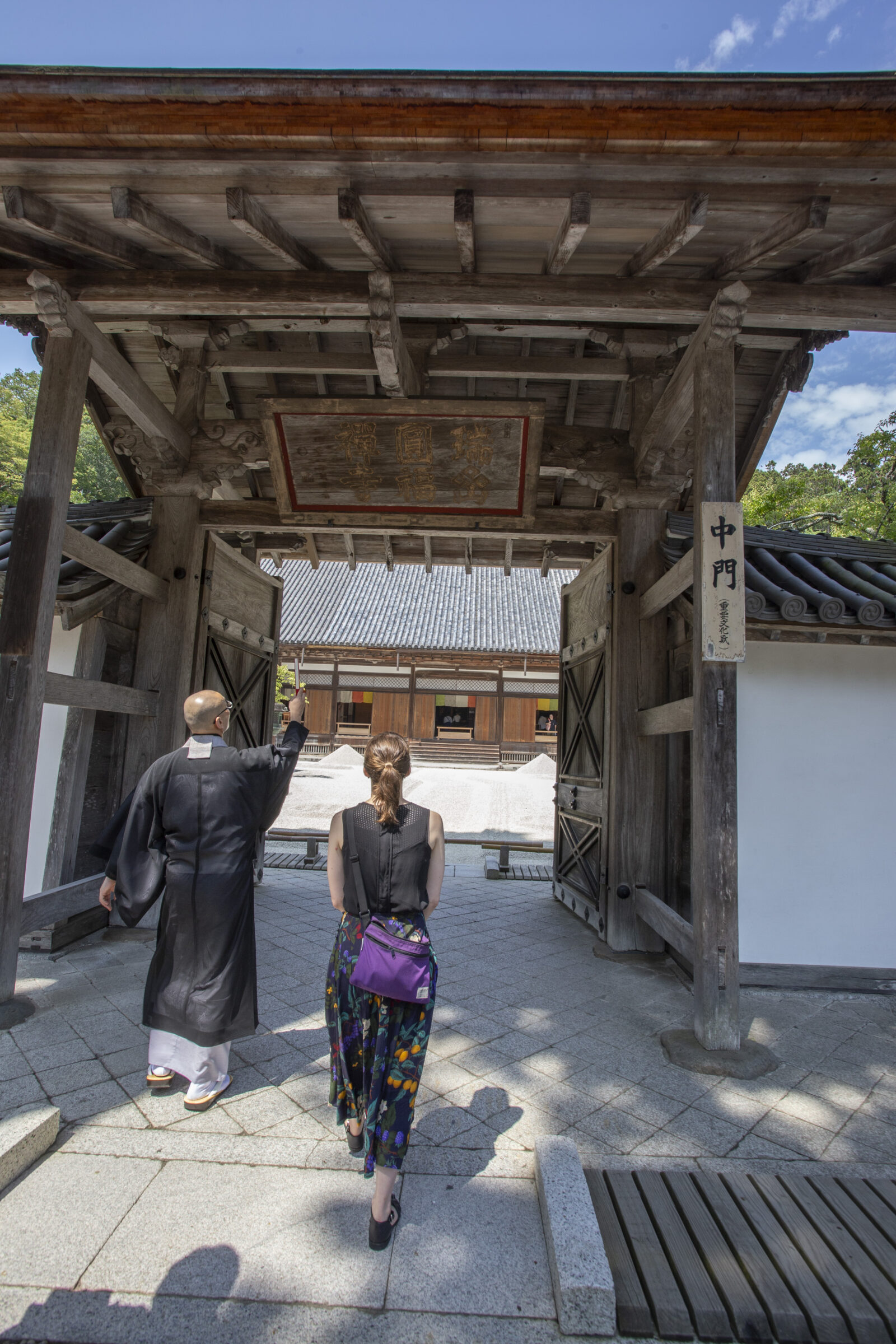
I have the honor of being guided today by Zuiganji’s general manager, Keiun Inatomi. Inatomi, dressed in robes, greets me warmly and guides me to our starting point, a cave known as Hosshinkutsu *1 , just opposite the admission gate. This cave, he explains, marks the beggining of Rinzai sect Buddhism in Matsushima. It’s also the location of an important chapter in the history of Zuiganji’s predecessor, Enpukji.
Enpukuji
Enpukuji was an extremely significant Buddhist temple in Matsushima whose recorded history can be traced back to the year 828. It was the site for centuries of pilgrimages by monks from around the country. As Rinzai sect Zen Buddhism gained popularity among the samurai, the regent of the Kamakura shogunate, Hojo Tokiyori, who was on a pilgrimage to Matsushima, met Zen Master Hosshin Seisai at the cave, Hosshinkutsu. After their meeting, Enpukuji was officially converted to a Rinzai sect Zen Buddhist temple, marking the beginning of Zen Buddhism at this site. This tradition is carried on by Zuiganji, today.
Zuiganji
Enpukuji eventually fell into disrepair, but in 1604, at the age of 26 and not long after being awarded the Sendai Domain, Date Masamune made the bold decision to rebuild Enpukuji, renaming it as ‘Shoto Seiyruzan Zuiganenpukuzenji,’ or Zuiganji, as it is commonly known. He spared no expense procuring the finest materials and craftsmen for its construction, which was completed just 5 years later, in 1609.
Now restored and earthquake-proofed, Zuiganji still stands today. Inatomi directs my gaze towards its two buildings, the main temple building (hondo) and the temple kitchen (kuri), both of which are National Treasures. The main temple building stands at 17m, equivalent to the height of a five-storey building, and is surrounded by walled Zen gardens and 3 gates. It’s roof, which is crafted with alternating round and flat tiles, a tall tiled ridge (irakamune), and triangular tile trim (suiteki-gara), was influenced by those of the castles and temples which Date Masamune saw in the domains of the West and the Korean Peninsula.
The temple wall’s southwest (onarimon) and northeast (touryumon) gates, which were used for auspicious guests and temple personnel respectively, are tiled in this same manner. But interestingly, its central gate for the general public (chumon) *2 , is topped with wooden tiles. “Was that wood sourced from the local area?” I ask Inatomi. “That is natural sawara cypress from Kiso that was put in during the temple’s restoration.”
The original wood used to build Zuiganji was also from Kiso, as well as present-day Wakayama. Date Masamune had the finest cypress, cedar, and zelkova brought from these regions. Coincidentally, I have just visited Kiso a few weeks prior, deep in the mountains of Nagano Prefecture. The roaring Kiso river, which was used to drive timber for centuries, is still fresh in my memory. What a journey that must have been, I think to myself. Not only were materials brought from afar, 130 master carpenters, as well as master painters and craftspeople, were summoned for Zuiganji’s construction.
Kuri
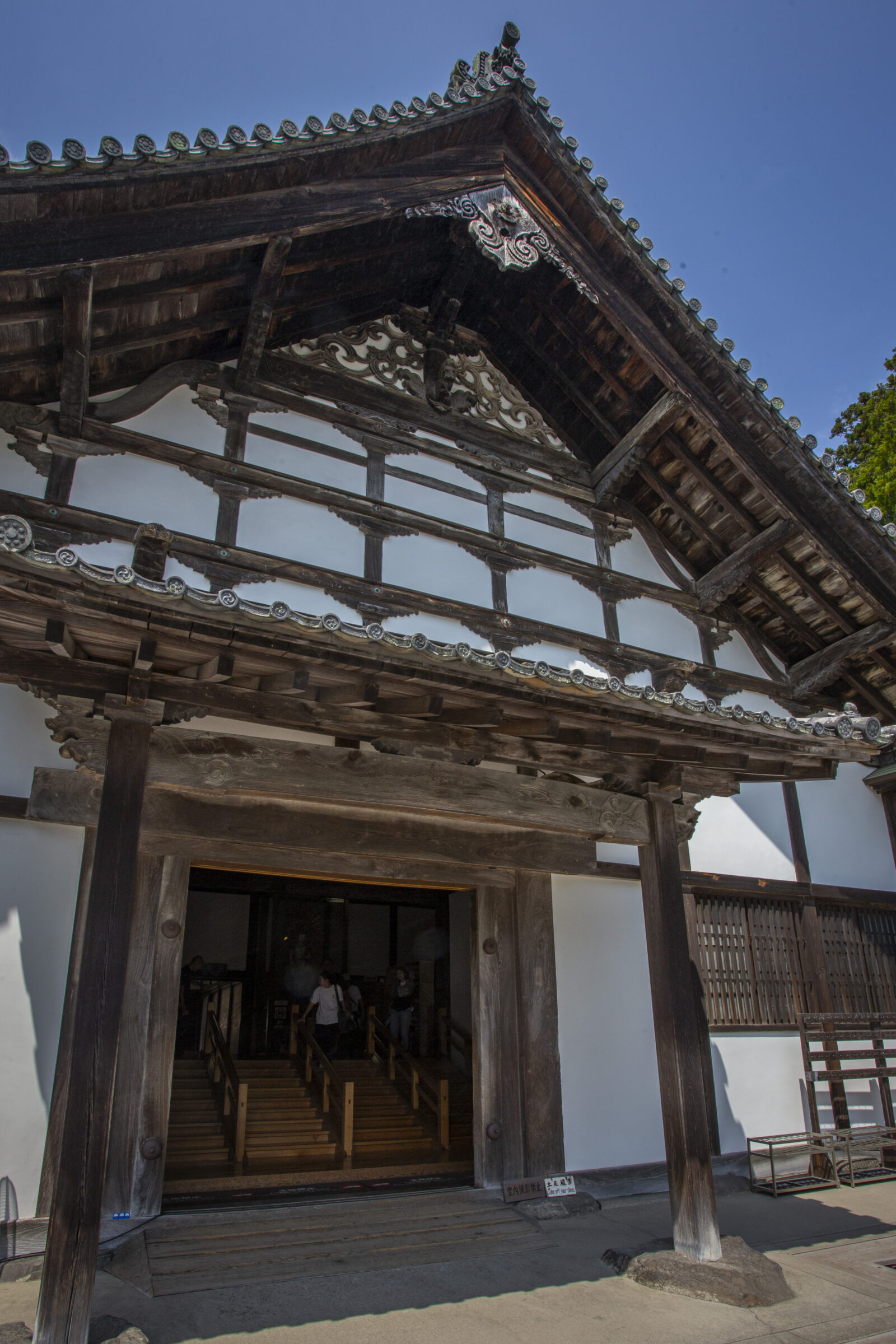
*3 The present-day entrance to Zuiganji is through the temple kitchen. Though utilitarian in purpose, this building is adorned with a tiled roof and elaborate wooden carvings which reflect Date Masamune’s sense of aesthetics. Its high ceiling is more like that of a cathedral’s than a kitchen’s, I think to myself as we go inside. Looking up, I see that the beams, joists, and rafters are carefully assembled from whole branches and tree trunks. Inatomi tells me that this, the wooden carvings, and the koryo (rainbow beams) in the long hall connecting to the temple’s main building, are regarded as exceptionally fine, and contributed to the building’s status as a National Treasure.
Hondo
Daylight streams into Zuiganji’s magnificent main building where many people have to come today to visit and pray. Its elaborate transom carvings, ornaments, and of course, gold leaf sliding doors, dazzle in the bright summer sunlight. Its 10 lavish rooms were used not only for worship, but also for the Date clan to receive guests. Most have been restored to the original condition they would have been in when first completed.
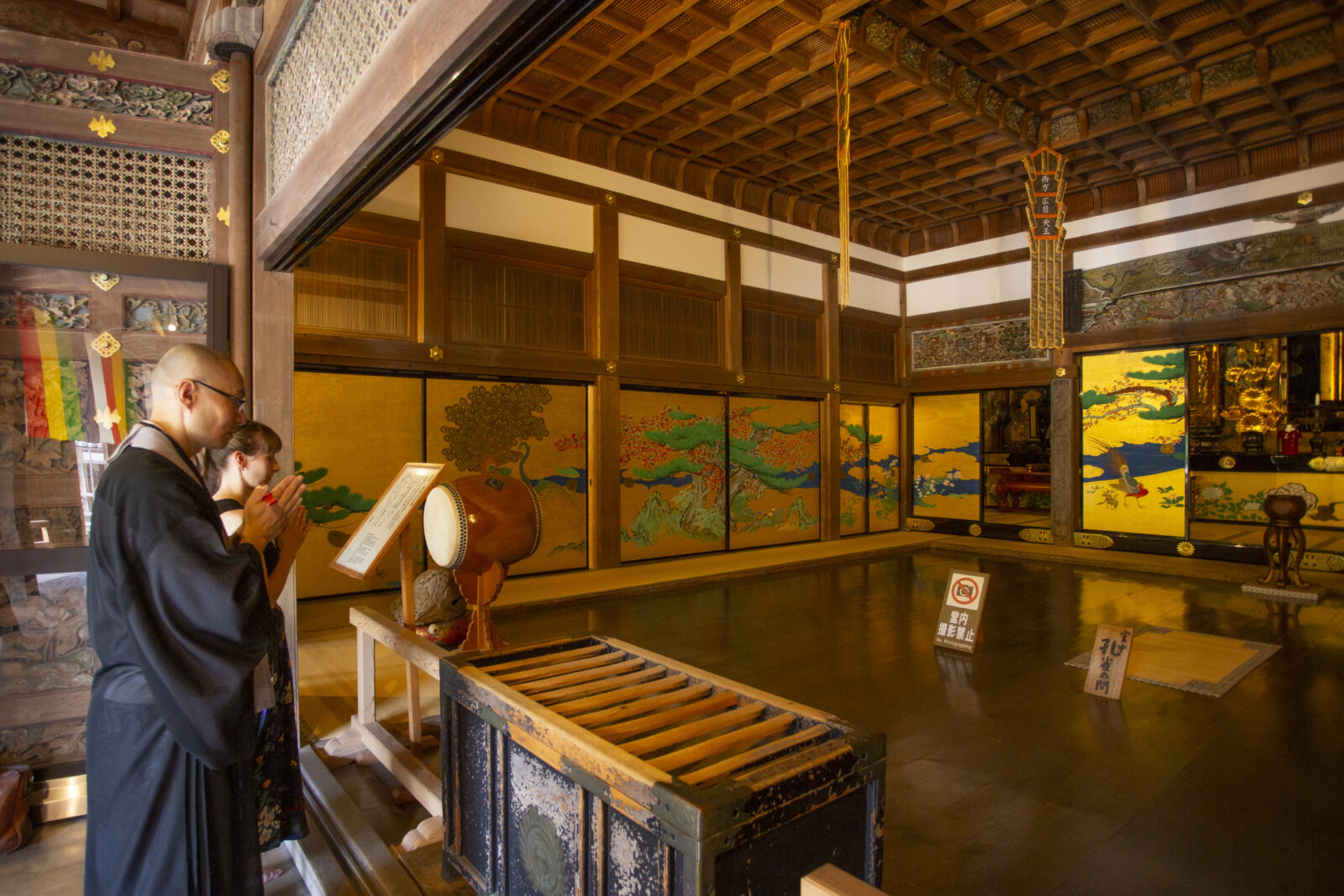
The building’s central room, referred to as shitsuchu *4 (also called the Peacock Room), is used for memorial services and ceremonies. Its sliding doors make extensive use of gold leaf and depict the four seasons and Buddhist motifs. Other elements, such as carved transom, banners, and the grand, coffered ceiling, are full of meaning and suggest the Pure Land and a space which transcends earthly time. This room’s sliding doors open onto the Buddhist altar room, which enshrines the Bodhisattva Kannon and memorializes Date Masamune, the succes sive feudal lords of the Sendai Domain, and the first chief
priests of Zuiganji.
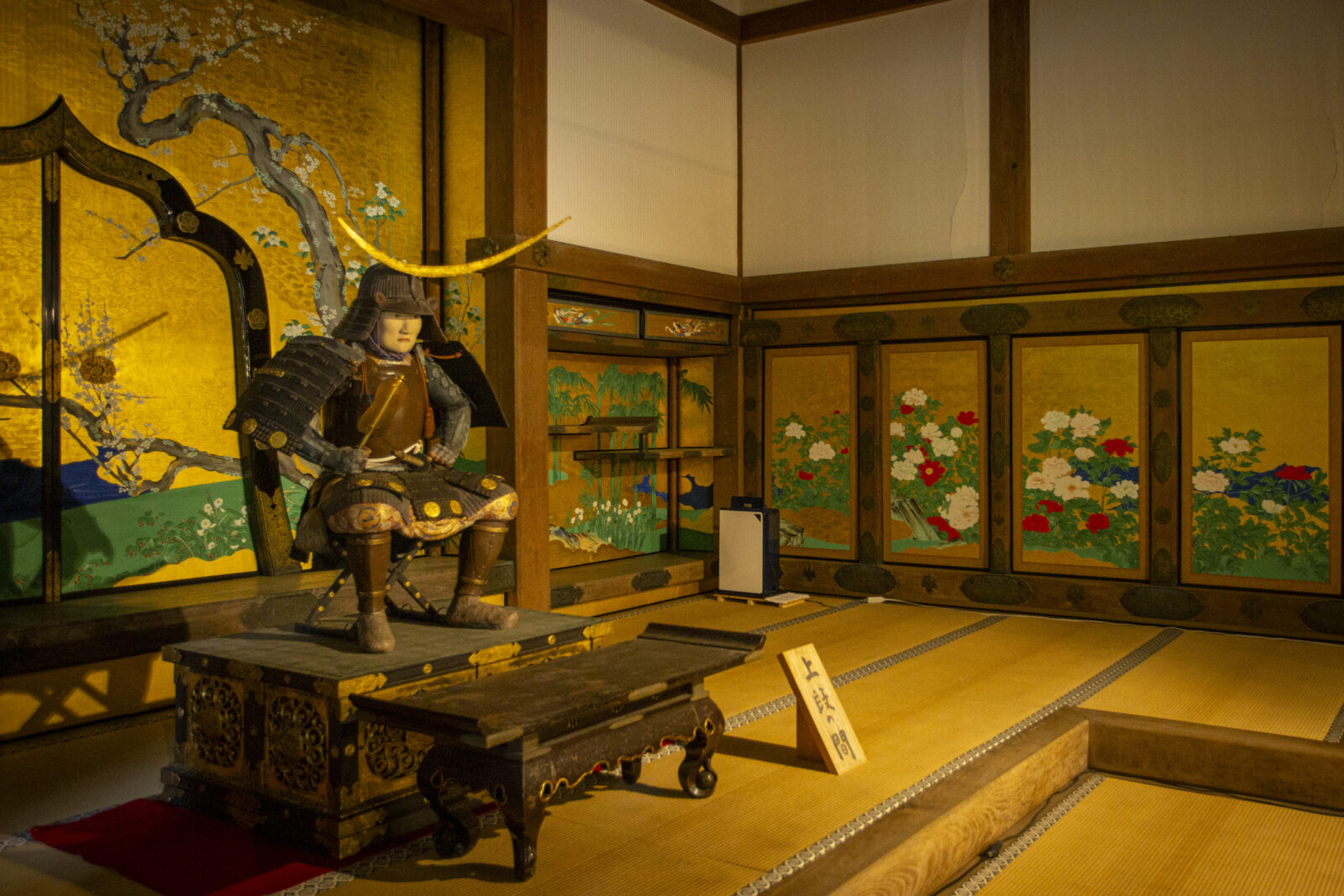
Another of Zuiganji’s largest rooms, called Bunno no Ma in Japanese, was used to receive the Date family and guests. Its paintings depict scenes featuring the prosperous Zhou Dynasty and its founder, King Wen. At the back is raised room where a wooden statue of Date Masamune in armor sits *5 . Though popular modern-day depictions of the samurai ruler often show him with an eye patch, there is no record of him actually having worn one. This statue, Inatomi tells me, is said to be a faithful likeness in size, height, and sans eye patch. Attached to this raised room, is yet another room raised one level higher. This room, called the Highest Room, was prepared exclusively for the imperial family, and was used by Emperor Meiji in 1876 during his tour of the Tohoku region.
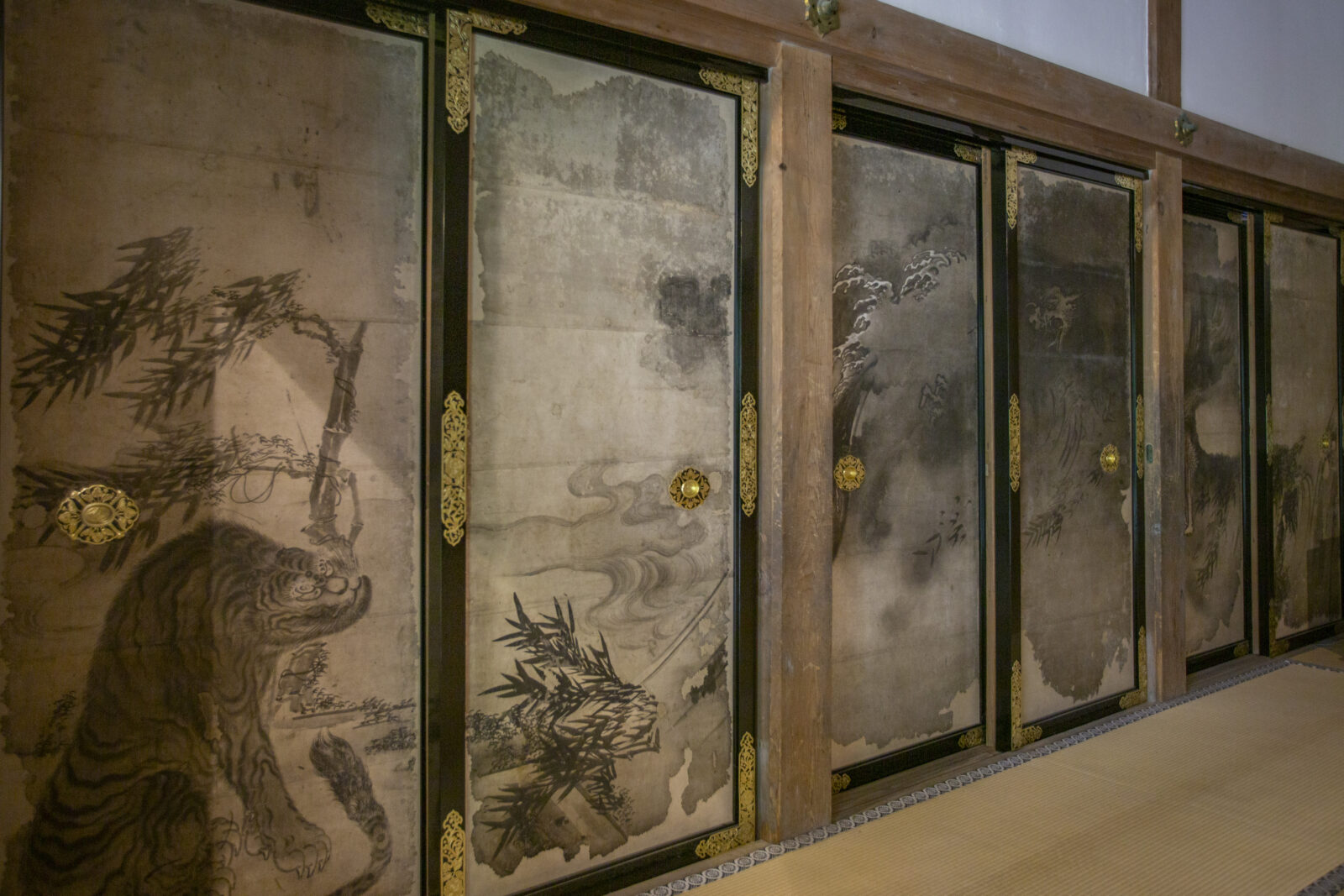
The gold leaf used in Zuiganji casts a warm glow throughout the building. There is only one room where
gold leaf is not used: the Sumi-e room *6 . This monks’ waiting room, painted in black ink wash, was not restored. Perhaps because of its contrast to the opulence of the others, I find myself intrigued by it. Inatomi explains that, while the other rooms are painted with many overt symbols such as animals and flowers, the ones of this room depict Buddhist themes which have no single interpretation, such as ‘Dragon and Tiger.’ Monks would have, no doubt, contemplated these paintings in the practice on nentei—which involves discussing one’s own opinions on the meaning of ancient works—while they waited here, he tells me.
Zen Gardens
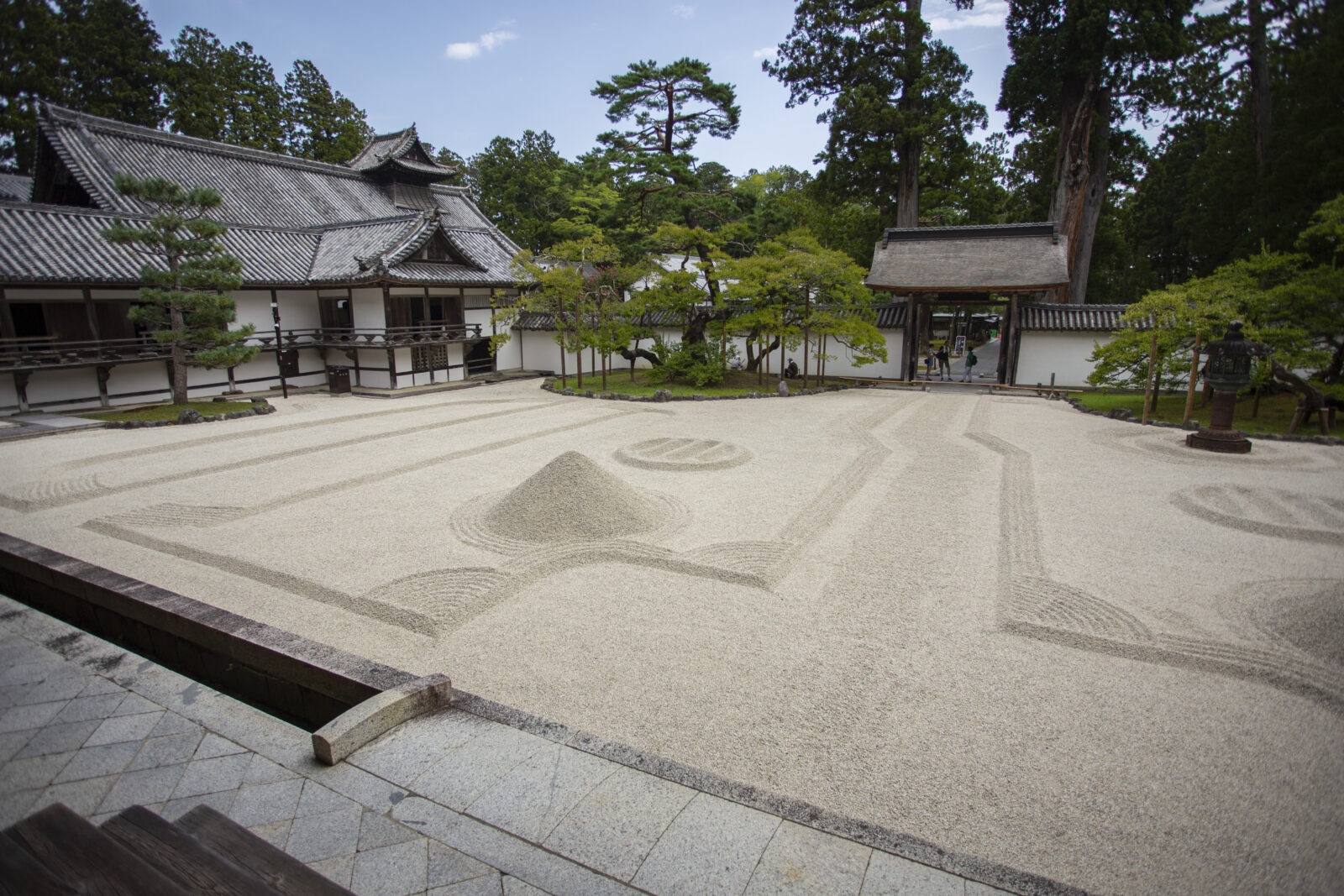
As my spectacular tour comes to an end, my eyes rest on the calm and harmonious Zen gardens which surround Zuiganji *7 . The garden directly in front of the main building is particularly spacious with a large gravel area representing water. Flanking both sides are two plum trees which Inatomi tells me were brought back from the Korean Peninsula by Date Masamune and are said to have been planted by the ruler himself. At over 420 years old, they continue to flower to this day, one pink and one white. I make a mental note to myself to come back in April to see them in full bloom.
Senshin-an
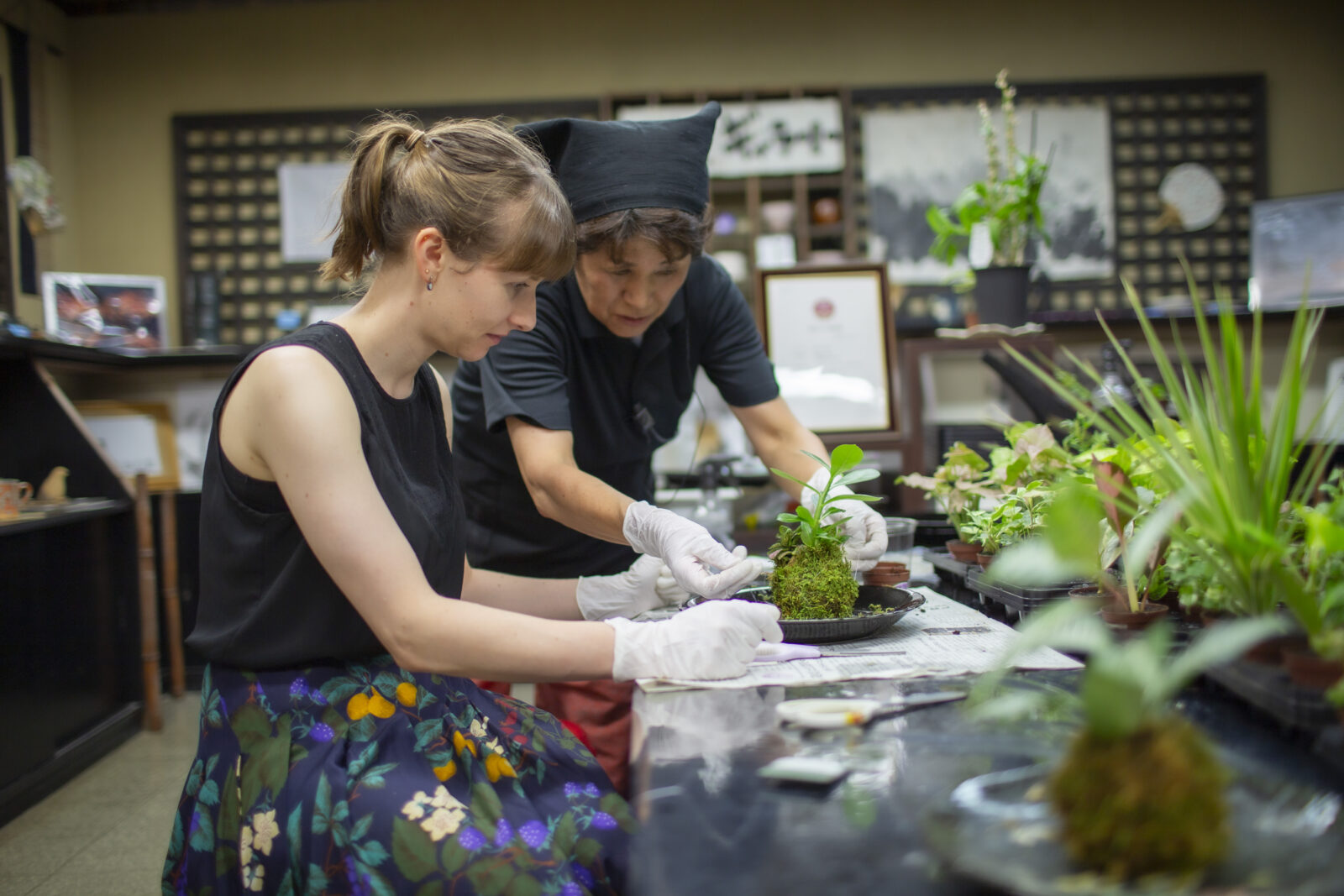
After thanking Inatomi for his guidance and the many insights he graciously shared with me (this article has only scratched the surface), I make my way to today’s last destination, Senshin-an *8 . Senshin-an is a shop which stands between the grounds of Zuiganji and the neighboring Entsu-in gardens and temple. It has a restaurant, souvenir shop, and a workshop where visitors can make their own koke-dama, or moss ball. With the kind guidance of Senshin-an staff, I make myself a totally unique koke-da-ma souvenir in about 20 minutes. Moss, which is essential to many ecosystems and supports regeneration, is also an important element of zen gardens. I’ve heard that it has a number of symbolic meanings, such as simplicity, resilience, and renewal. To me, my koke-dama is the perfect reminder of Matsushima’s enduring spirituality which goes back beyond recorded history.
Zuiganji temple (National Treasure)
Address: 91 Matsushima Aza Chonai Matsushima-machi, Miyagi Pref.
Tel: 022-354-2023
Entrance Fee: 700yen (adults, including high school and college
students) 400yen(children, elementary and junior high school students)
Hours: 8:30 – 16:00
Access: Senseki Line, 10 minute walk from JR Matsushima Kaigan station – Tohoku Main Line, 25 minute walk from JR Matsushima Station
Website: https://www.zuiganji.or.jp/
Senshin-an
Address: 67 Matsushima Aza Chonai Matsushima-machi, Miyagi Pref. Tel: 022-354-3205
Hours: 10:00 – 16:00 Last reception 15:00 Moss ball
Entrance Fee: 1,500yen – (30-50min)
Website: https://www.sensinan.co.jp
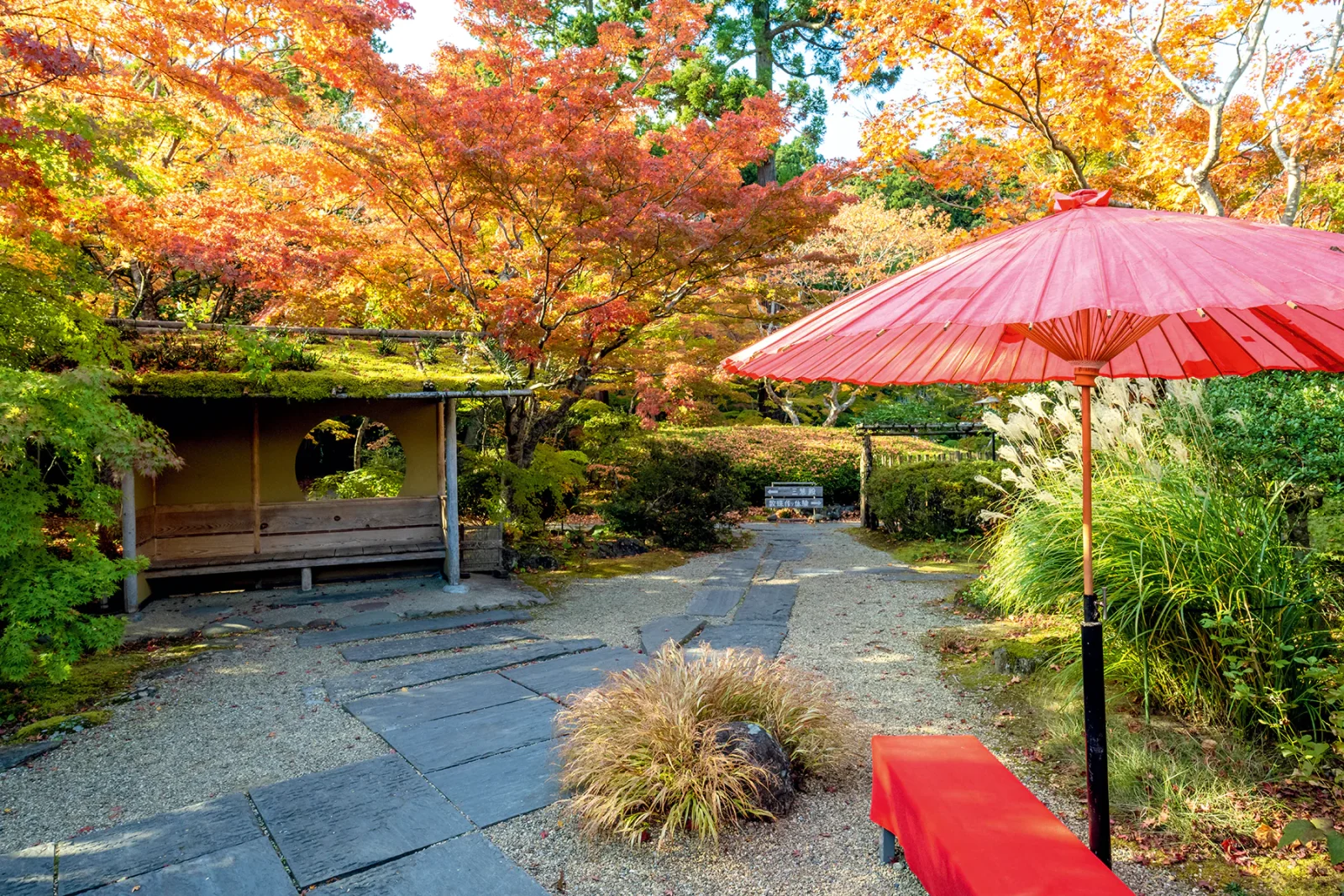
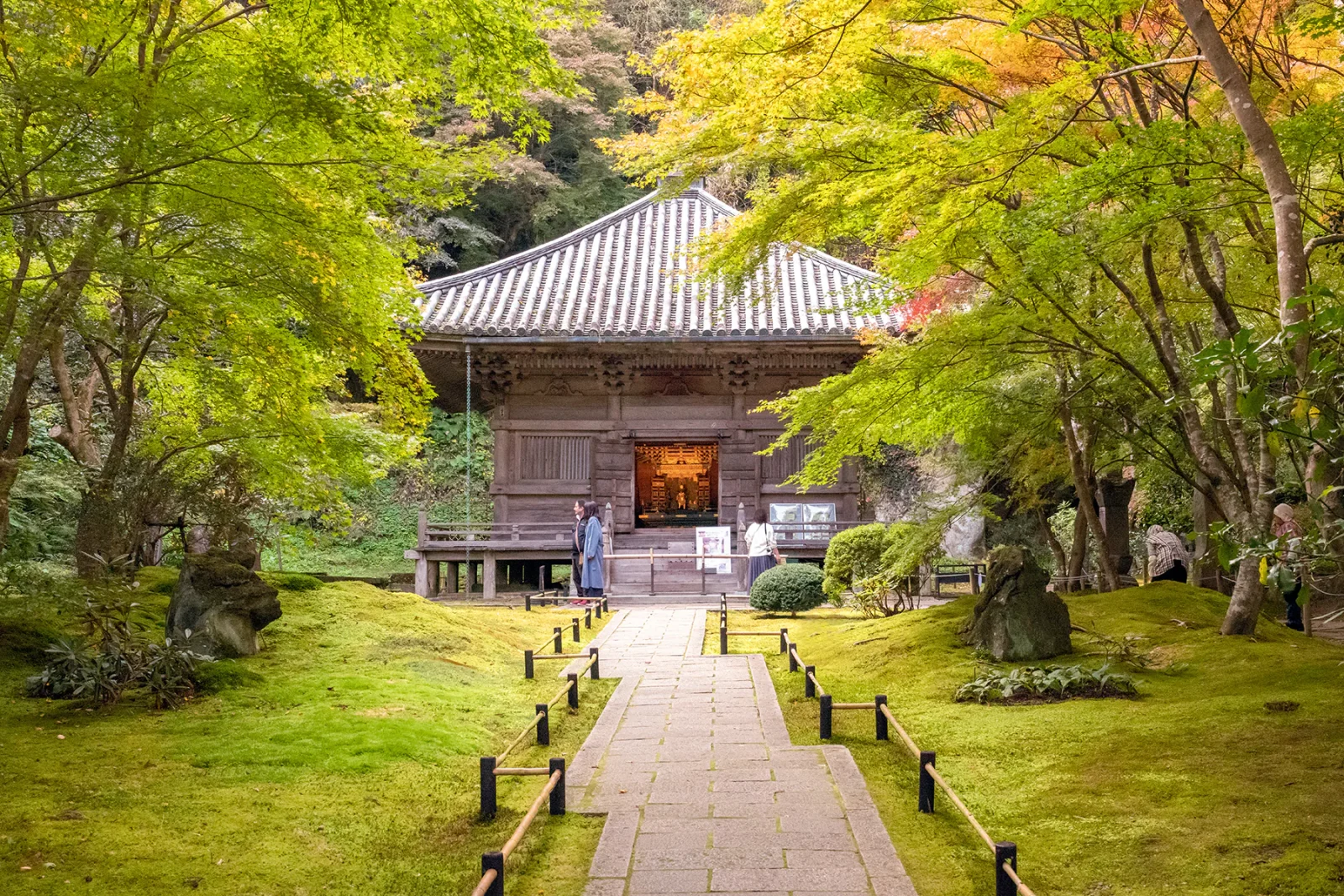
Entsuin Temple
The mausoleum of Mitsumune, the eldest grandson of Date Masamune. The Zushi (a miniature shrine) inside the Sankeiden, where Mitsumune is enshrined, features motifs resembling roses, hearts, and spades, giving it a mystical beauty. It is designated as an Important Cultural Property of Japan. The garden is renowned for its seasonal beauty, including fresh greenery in spring, vibrant roses in early summer, and illuminated autumn foliage. A popular attraction is the Juzu (Buddhist prayer beads) production experience, where visitors can craft prayer beads from natural stones or plastic.
Address: Chonai 67, Matsushima, Matsushima-machi, Miyagi District, Miyagi Prefecture 981-0213
Phone: 022-354-3206
Opening hours: 09:00-16:00 from April to November 9:00-15:30 from December to March | Juzu making experience: 09:00- 15:30 from April to November 9:00-15:00 from December to March 1,000 yen –
Website: https://www.entuuin.or.jp/
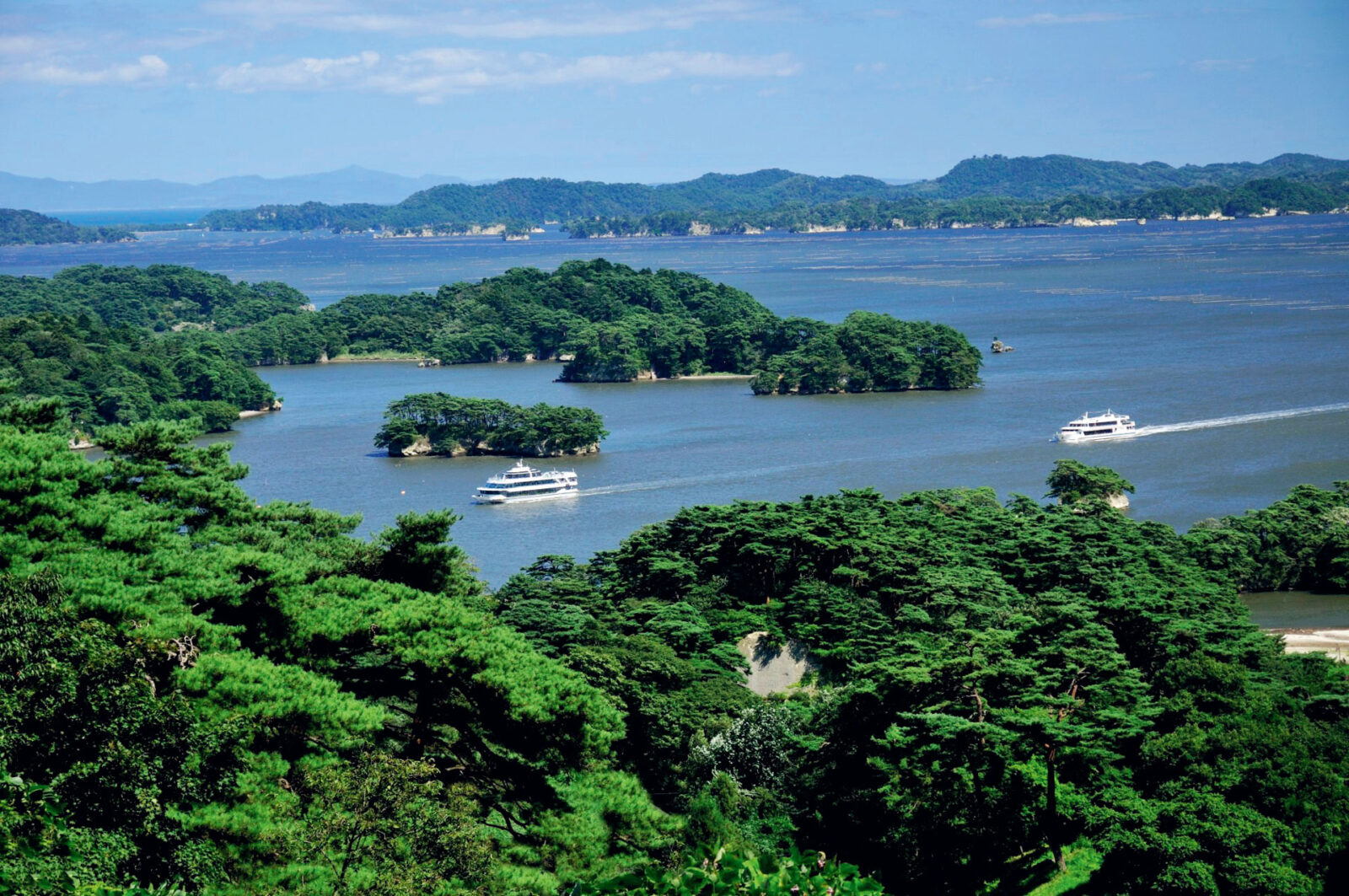
Matsushima Bay Sightseeing Cruises
A cruise through Matsushima Bay, home to over 260 beautiful islands in many sizes, offers breathtaking views up close. The main sightseeing routes operate hourly from 10:00 to 15:00. There are two main courses: one that circles Matsushima Bay and one connecting Matsushima and Shiogama. Three cruise companies operate these routes, with ticketing available at the Matsushima Coast Rest House.
Matsushima Bay Cruise Cooperative
Phone: 022-354-2233
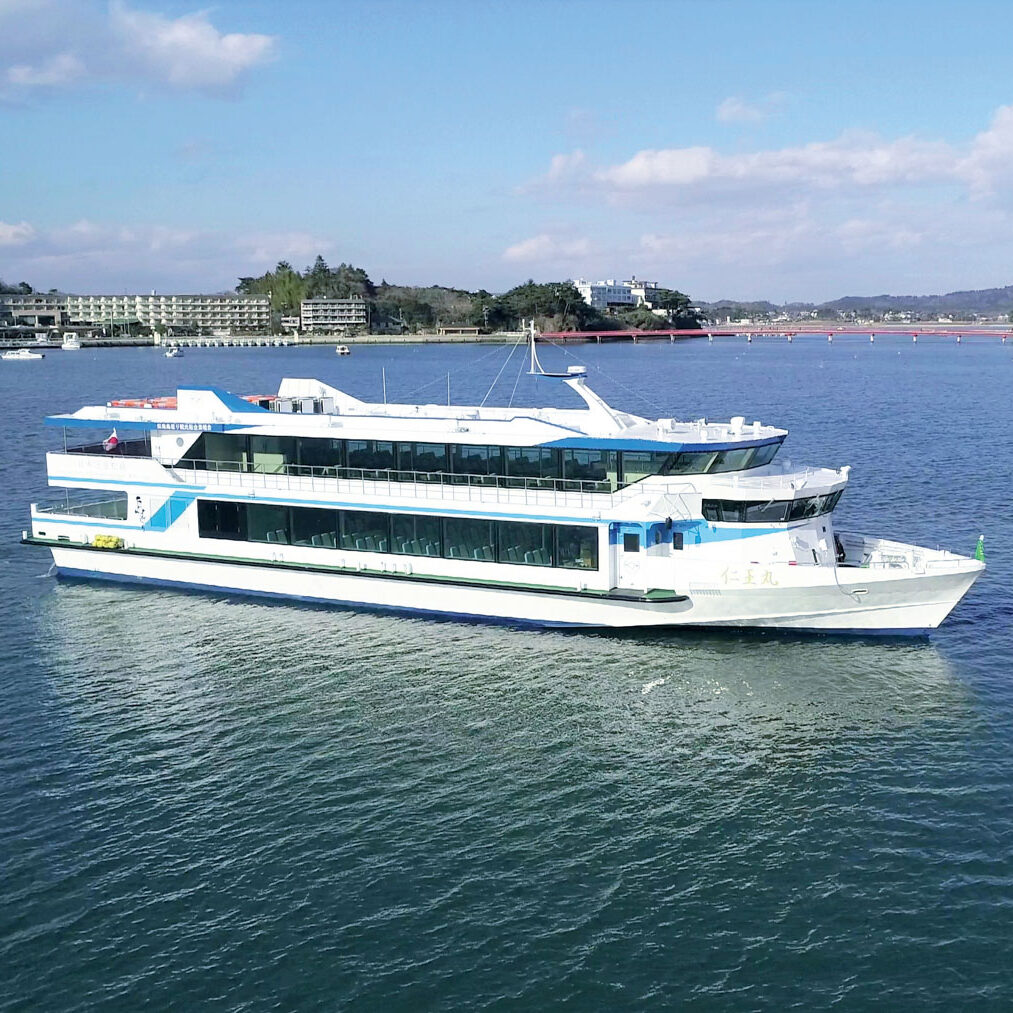
Departure times: Every hour from 10:00 to 15:00 (Extratrips at 9:00 and 16:00) Niomaru Course (Matsushima Bay Full Circle, approx. 50 minutes) Adults:1,500 yen
Elementary school students: 750 yen Green seat (2nd floor) additional charge: Adults: 600 yen
Elementary school students: 300 yen
New Matsushima Sightseeing Cruises
Phone: 022-357-0377
Departure times: Every hour from 10:00 to 15:00
Prices – Matsushima Bay Round Trip Course (approx. 50 minutes)
Reservations required 2nd Class (1st floor):
Adults: 1,500 yen
Elementary school students: 750 yen
Green seat (2nd floor) additional charge:
Adults: 600 yen
Elementary school students: 300 yen
First Class (3rd floor) additional charge:
Adults: 1,400 yen
Elementary school students: 700 yen
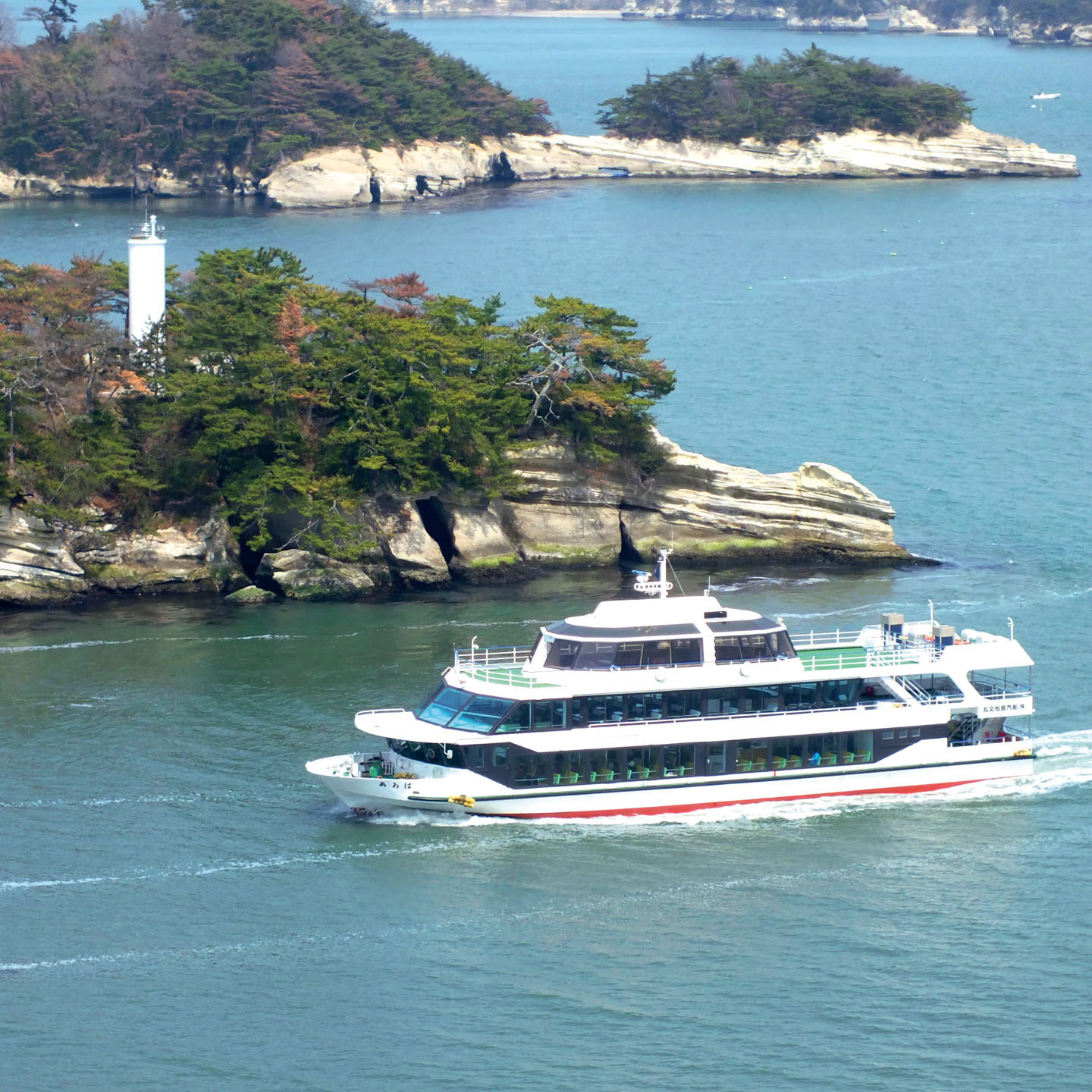
Marubun Matsushima Kisen
Phone: 022-354-3453
Matsushima Sightseeing Luxury Plan: Sightseeing Boat + Sasa Kamaboko Hand-Grilling Experience + Grilled Oyster (1 piece) Price: Adults: 1,500 yen
Elementary School Students: 1,000 yen [Sightseeing Boat] (Masamune Course – One Full Round of Matsushima Bay)
Departures: 10:00, 11:00, 12:00, 13:00, 14:00, 15:00 (Basho Course)
Cruise between Matsushima and Shiogama Departures from Shiogama: 9:00, 10:00, 11:00, 12:00, 13:00, 14:00, 15:00
Departures from Matsushima: 10:00, 11:00, 12:00, 13:00, 14:00, 15:00
*Upon boarding check-in, you will receive exchange tickets for the Sasa Kamaboko hand-grilling experience and grilled oyster, along with a map to the shop. Please visit the shops at your own convenience.
Sasa Kamaboko hand-grilling
experience and grilled oyster: 9:30–16:00 (The Sasa Kama boko experience is at Matsushima Kamaboko Honpo, and grilled oysters are at Takesu zuan on the Date Masamune History Museum grounds.
